USS Laffey (DD-724)
Honoring the destroyer that defied death at Okinawa and beyond
USS Laffey (DD-724)
USS Laffey — “The Ship That Would Not Die” is dedicated to the history and legacy of the legendary U.S. Navy destroyer USS Laffey (DD-724), one of the most battle-tested ships of World War II.
The site explores the destroyer’s wartime service in the Pacific, including its role in the Battle of Okinawa where the ship endured one of the most intense kamikaze attacks of the war. Struck by multiple aircraft and bombs, USS Laffey survived the assault through the determination and skill of its crew, earning its enduring nickname.
Visitors will find historical information about the ship’s design, combat history, and the sailors who served aboard her during World War II, the Korean War, and the Cold War. The site also highlights the ship’s preservation today as a historic naval museum ship so that future generations can learn about the courage and sacrifice of those who fought aboard her.
Through archival material, photographs, and historical research, the project aims to preserve and share the remarkable story of USS Laffey and the men who served on one of the most resilient destroyers in U.S. naval history.
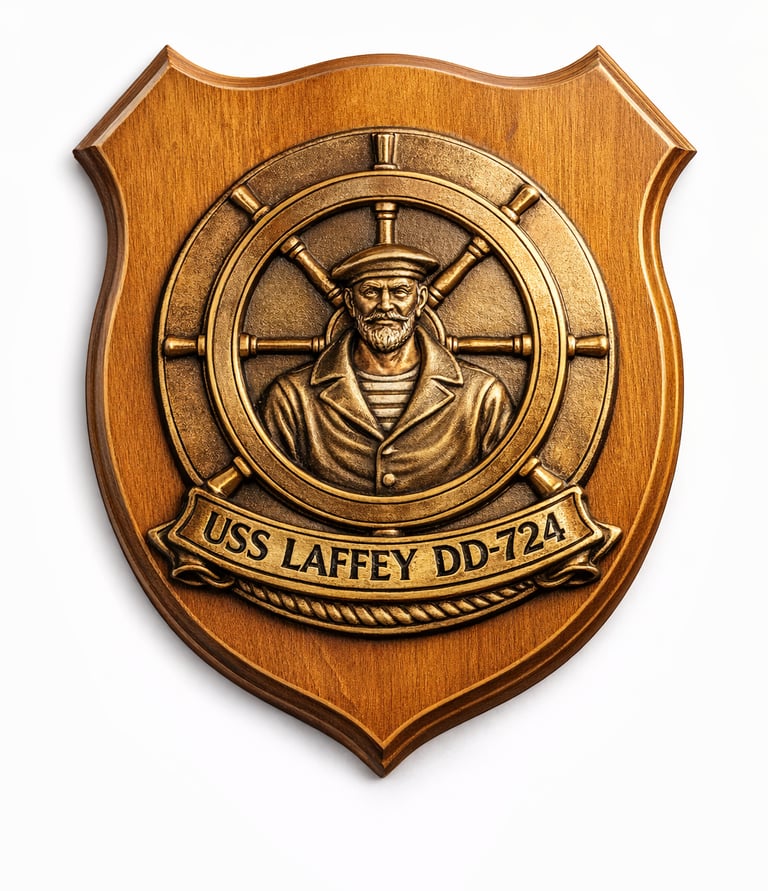
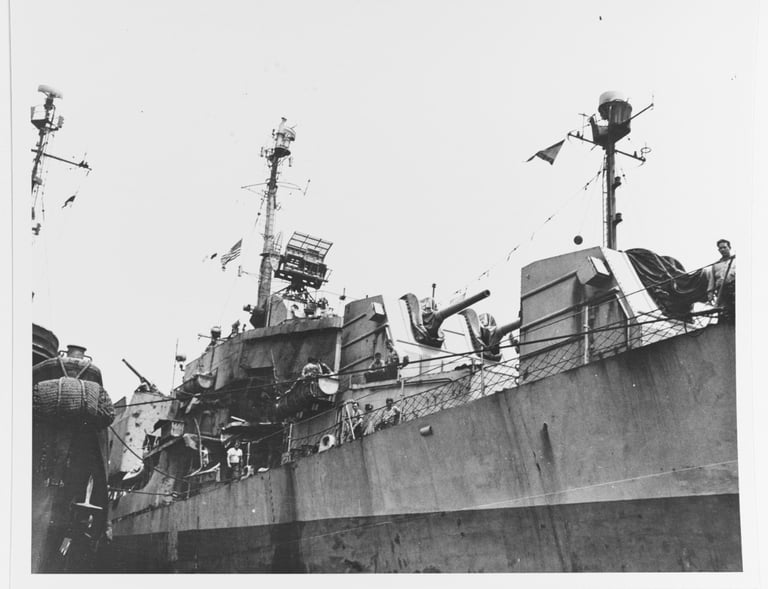
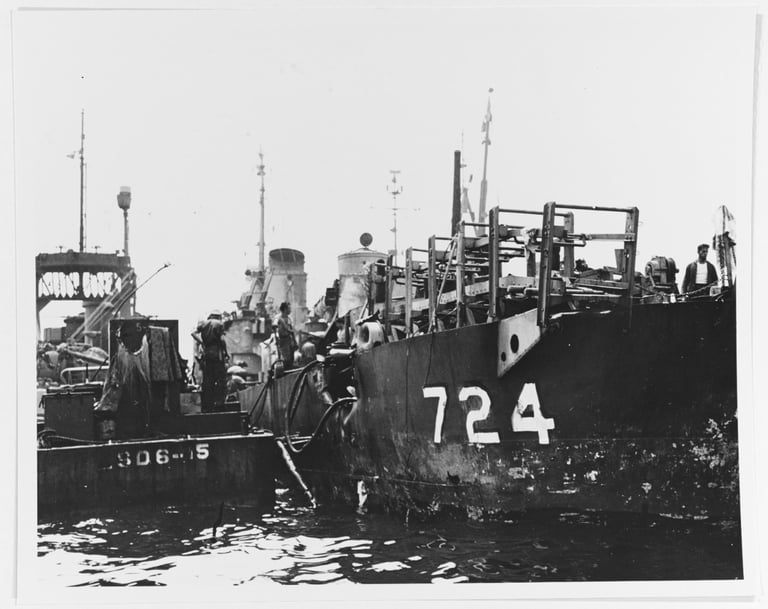
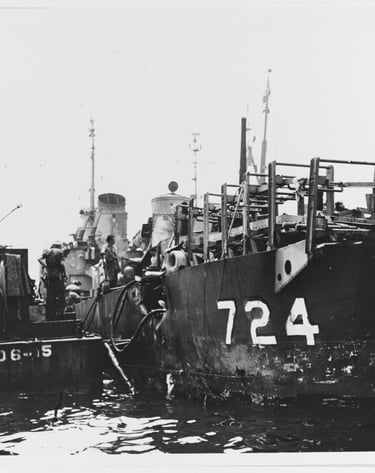
USS Laffey (DD-724) survived one of the most intense kamikaze attacks of World War II, enduring six direct aircraft hits and multiple bombs during the Battle of Okinawa on April 16, 1945.
USS LAFFEY — THE SHIP THAT WOULD NOT DIE
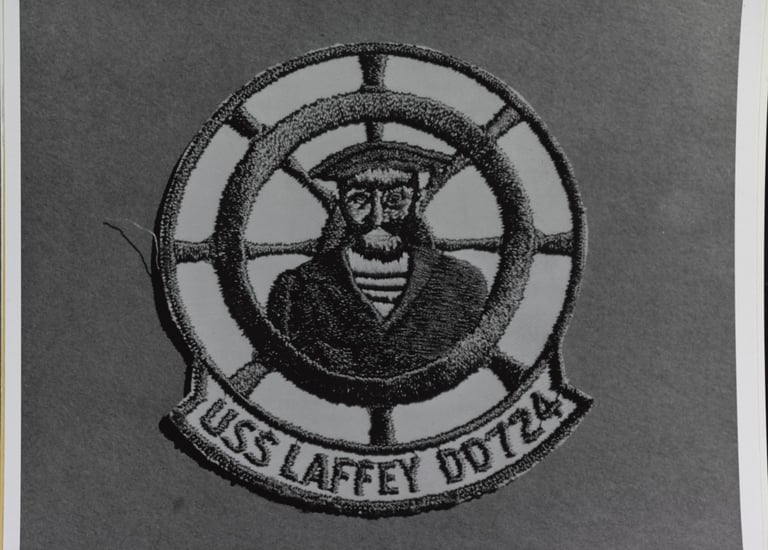
USS Laffey (DD-724) was an Allen M. Sumner-class destroyer built at Bath Iron Works in Maine and commissioned into the U.S. Navy on February 8, 1944. The ship was named for Seaman Bartlett Laffey, a Medal of Honor recipient from the Civil War who showed extraordinary bravery during the Battle of Mobile Bay.
Like many destroyers of World War II, Laffey was designed to operate on the front lines of naval warfare. She escorted larger ships, screened carrier task forces, and defended the fleet from aircraft and submarines. Armed with powerful 5-inch guns, anti-aircraft batteries, torpedoes, and advanced radar equipment, destroyers like Laffey formed a critical shield around the main battle fleet.
Her most famous moment came during the Battle of Okinawa in April 1945, one of the largest and most intense naval battles of the Pacific War. To provide early warning of incoming Japanese aircraft, several destroyers were stationed far ahead of the fleet on radar picket duty. These ships served as floating radar outposts, detecting enemy aircraft before they could reach the invasion force.
On April 16, 1945, USS Laffey was stationed at Radar Picket Station No. 1 about thirty miles north of Okinawa when large formations of Japanese aircraft began approaching. What followed was one of the most intense air assaults ever faced by a single destroyer.
For nearly ninety minutes waves of enemy aircraft attacked the ship. Kamikaze pilots dove directly toward the destroyer while bomb-carrying planes attempted to break through the defensive fire. Laffey’s gunners fought back with everything the ship had. Anti-aircraft guns thundered as nearby American fighters attempted to intercept the attackers.
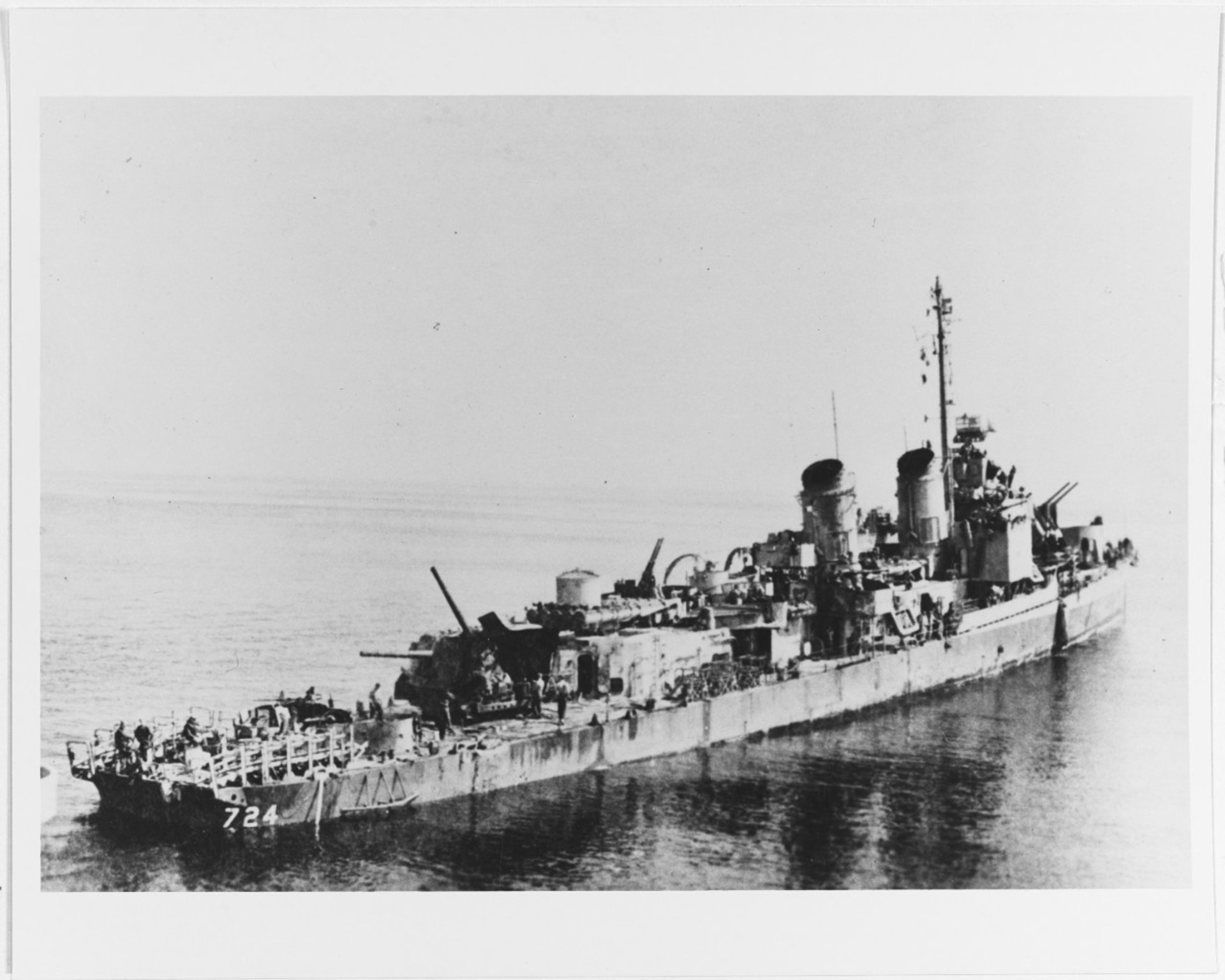
Several aircraft were shot down before reaching the ship, but others broke through. During the attack the destroyer was struck by multiple bombs and several kamikaze aircraft. Explosions tore through sections of the superstructure, fires spread across the deck, and gun mounts were shattered by the blasts.
Despite the destruction, the crew refused to abandon their ship. Sailors continued firing the remaining guns while damage-control teams battled fires, sealed damaged compartments, and worked desperately to keep the destroyer afloat.
When the attack finally ended, thirty-two members of the crew had been killed and dozens more were wounded. Yet the ship itself was still afloat.
Against all expectations USS Laffey managed to leave the battle area under her own power. The determination of her crew and the ship’s remarkable ability to survive such punishment earned her a reputation that would follow the destroyer for the rest of her career.
From that day forward she became known as “The Ship That Would Not Die.”
After repairs Laffey continued serving with the U.S. Navy in the years following World War II, including service during the Korean War and the early Cold War. She remained in operation for decades before finally being decommissioned in 1975.
Today USS Laffey is preserved as a historic museum ship at Patriots Point Naval & Maritime Museum in Mount Pleasant, South Carolina. Visitors can walk the decks of the destroyer and see the ship that survived one of the fiercest kamikaze attacks of World War II.
Our Story
USS Laffey — After the Storm
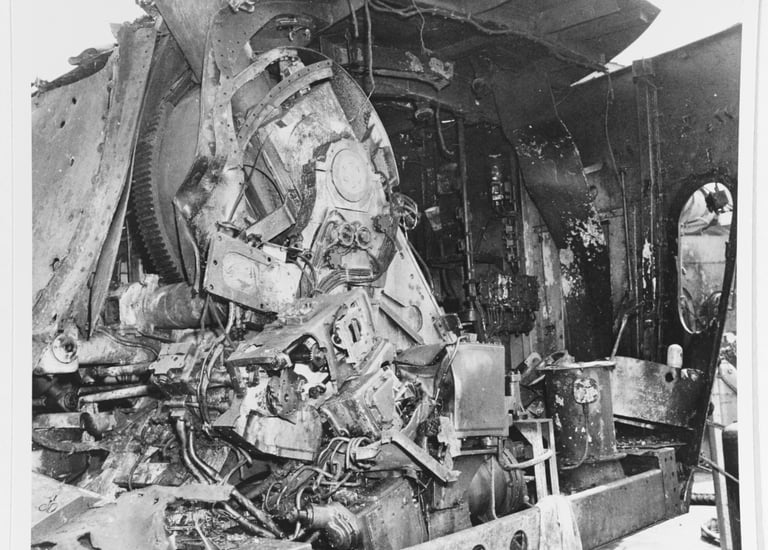
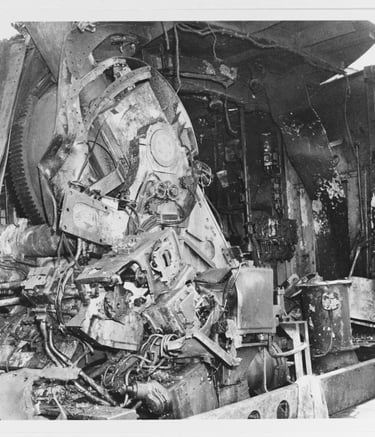
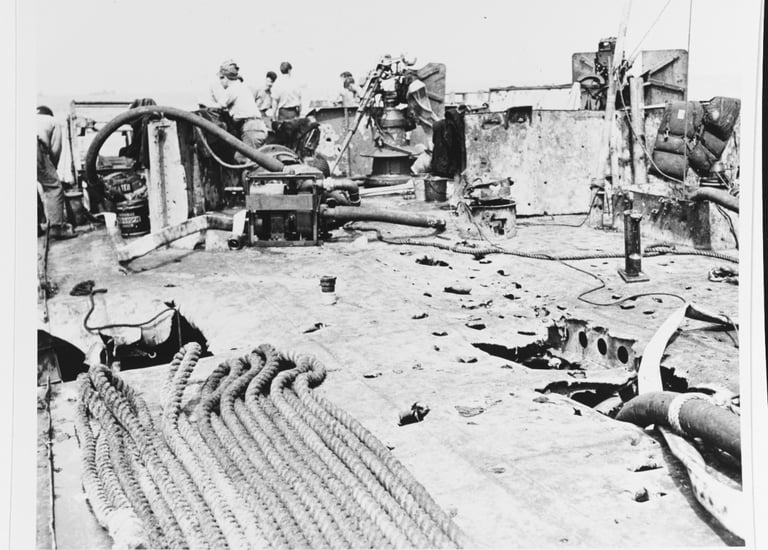
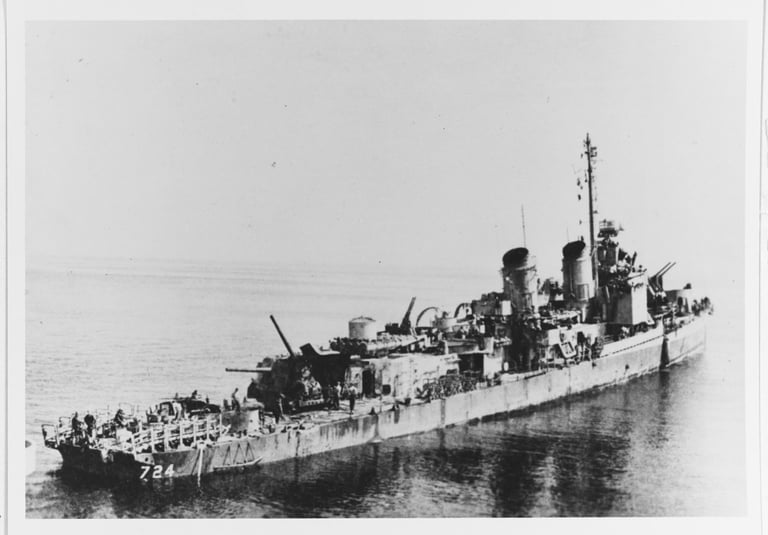
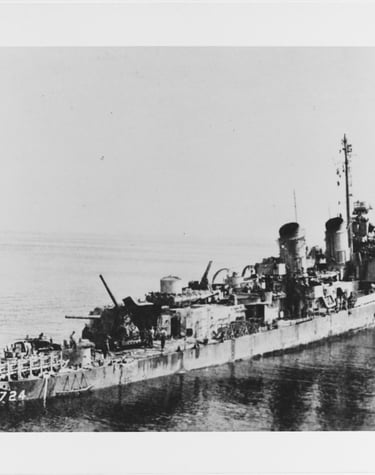
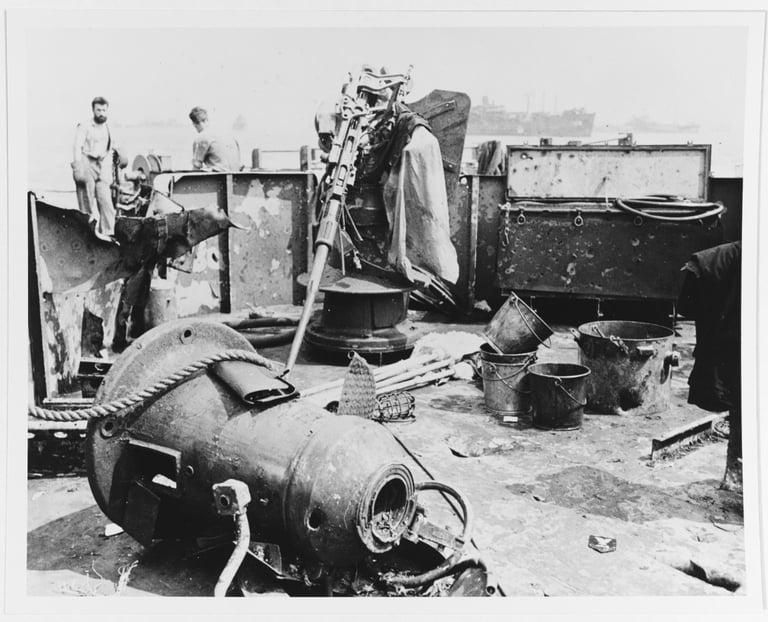
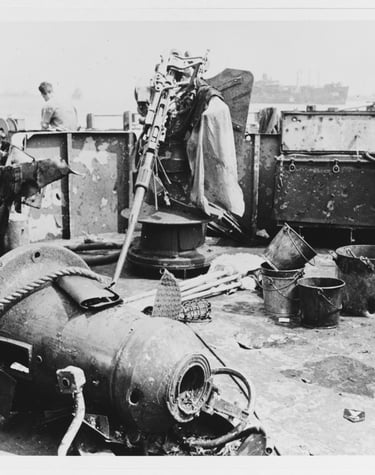
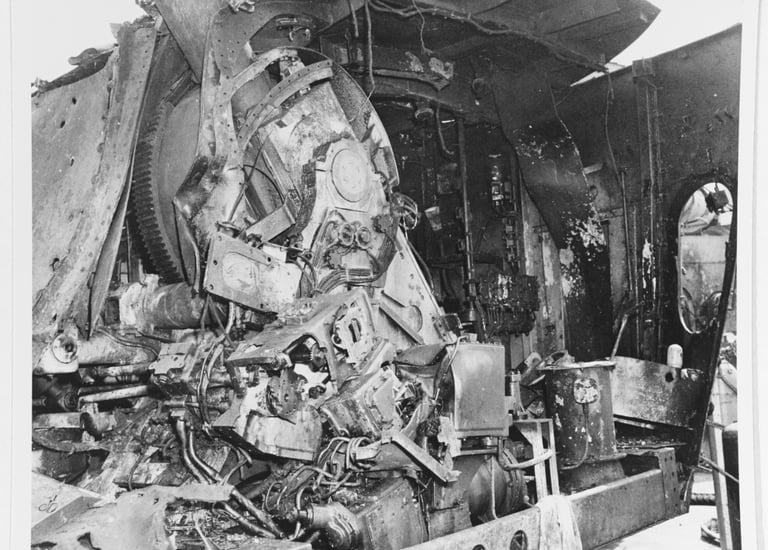
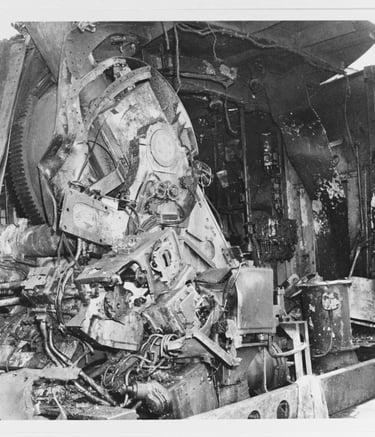
This photograph shows the shattered remains of a 5-inch gun mount aboard USS Laffey (DD-724) after one of the most intense kamikaze attacks endured by any American warship during World War II.
On April 16, 1945, while stationed north of Okinawa as part of the Navy’s radar picket line, the destroyer became the focus of a massive Japanese air assault. Radar picket ships were positioned ahead of the main fleet to provide early warning of incoming aircraft, but the duty placed them directly in the path of enemy attacks.
That morning, wave after wave of Japanese aircraft descended on the small destroyer.
Kamikaze planes dove out of the clouds. Bombs exploded along the deck. Anti-aircraft guns roared continuously as the crew fought to keep the attackers away from the ship.
In the span of roughly ninety minutes, USS Laffey was struck by multiple bombs and at least six kamikaze aircraft. Fires broke out across the ship. Metal was twisted and torn open. Gun mounts like the one seen here were smashed by explosions and burning debris.
Despite the devastation, the crew refused to abandon the destroyer.
Damage control teams battled fires while sailors continued firing the remaining guns at incoming aircraft. Smoke poured from the ship, yet Laffey stayed in the fight until the attacks finally ended.
Thirty-two sailors were killed and dozens more were wounded during the assault, but the destroyer remained afloat.
Against all odds, the battered ship was able to steam away from the battle under her own power.
For surviving that relentless attack and continuing to fight, USS Laffey earned a lasting nickname among sailors and historians:
“The Ship That Would Not Die.”
Today the destroyer is preserved as a historic museum ship so that the story of the crew who fought aboard her—and the incredible damage she survived—will not be forgotten.
Survived fierce kamikaze attacks in 1945.